Introduction
The Chain Rule is an essential tool in calculus for differentiating composite functions. While it is a powerful technique, students often make mistakes that lead to incorrect results. Understanding these common errors and learning how to avoid them is crucial for mastering calculus. This guide highlights frequent mistakes when applying the chain rule and provides tips to improve accuracy.
What is the Chain Rule
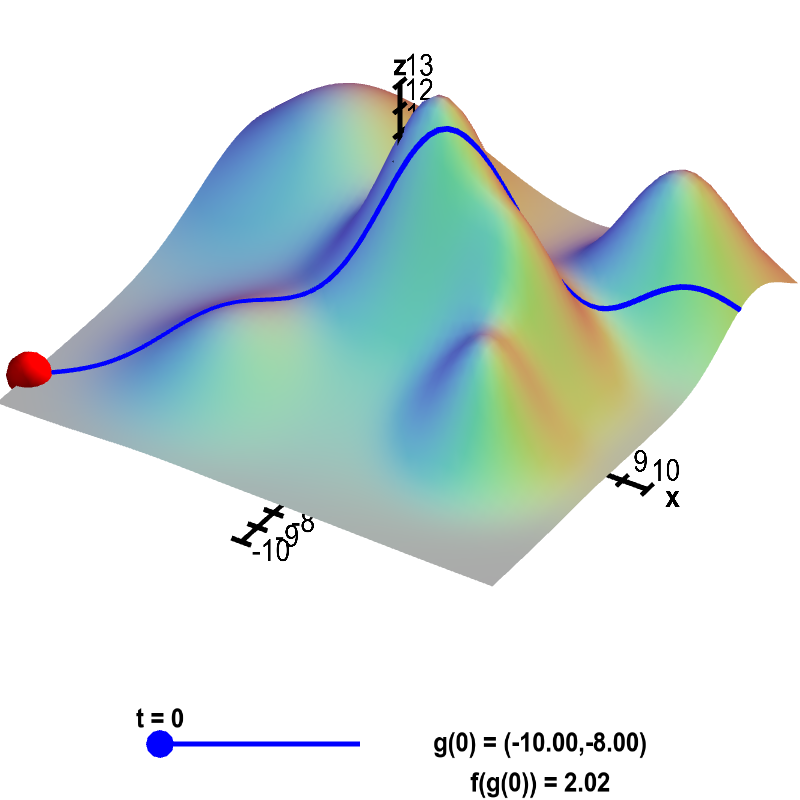
The chain rule is used to differentiate a function composed of two or more functions. If y = f(g(x)), the derivative of y with respect to x is
dy/dx = f'(g(x)) * g'(x)
This means you differentiate the outer function while keeping the inner function intact and then multiply by the derivative of the inner function.
Common Mistakes and How to Avoid Them
Mistake 1 Forgetting to Multiply by the Derivative of the Inner Function
One of the most common errors is neglecting to multiply by g'(x). Always remember that the chain rule requires both derivatives.
Example: y = (3x + 2)⁵
Correct derivative: dy/dx = 5(3x + 2)⁴ * 3 = 15(3x + 2)⁴
Mistake 2 Confusing Inner and Outer Functions
Misidentifying the inner and outer functions can lead to incorrect results. Always clearly define which function is inside and which is outside.
Tip: Write the function as y = f(g(x)) and label each part before differentiating.
Mistake 3 Applying the Chain Rule When Not Needed
Not all derivatives require the chain rule. Using it unnecessarily can complicate the solution. Check if the function is actually a composite function before applying the rule.
Mistake 4 Skipping Steps
Rushing through differentiation can lead to arithmetic or sign errors. Always write intermediate steps to ensure accuracy, especially with complex expressions.
Mistake 5 Ignoring Negative Signs or Parentheses
Forgetting negative signs or misplacing parentheses can drastically change the derivative. Pay close attention to each term and use parentheses to maintain clarity.
Tips for Avoiding Mistakes
- Clearly identify inner and outer functions
- Use parentheses to track the inner function
- Double-check each step to prevent errors
- Practice with a variety of functions to gain confidence
- Review mistakes to understand patterns and prevent repetition
Example for Practice
Differentiate y = sin(2x² + 3x)
- Inner function: g(x) = 2x² + 3x
- Outer function: f(u) = sin(u)
- Derivative: dy/dx = cos(2x² + 3x) * (4x + 3)
This example illustrates how correctly identifying and applying the chain rule prevents mistakes.
Conclusion
Avoiding common mistakes when applying the chain rule is essential for mastering calculus. By understanding frequent errors and following practical tips, students can solve composite functions accurately and efficiently. For more educational resources and the latest updates in learning, visit YeemaNews.Com, a site that shares fresh and practical insights on education.
